Choose Your Mentor
Eight ancient archetypes, each embodying a different path to wisdom.
Wisdom for Your Journey
 Self-Mastery
Ego Is the Enemy
Ryan Holiday
 Self-Mastery
Can't Hurt Me
David Goggins
 Self-Mastery
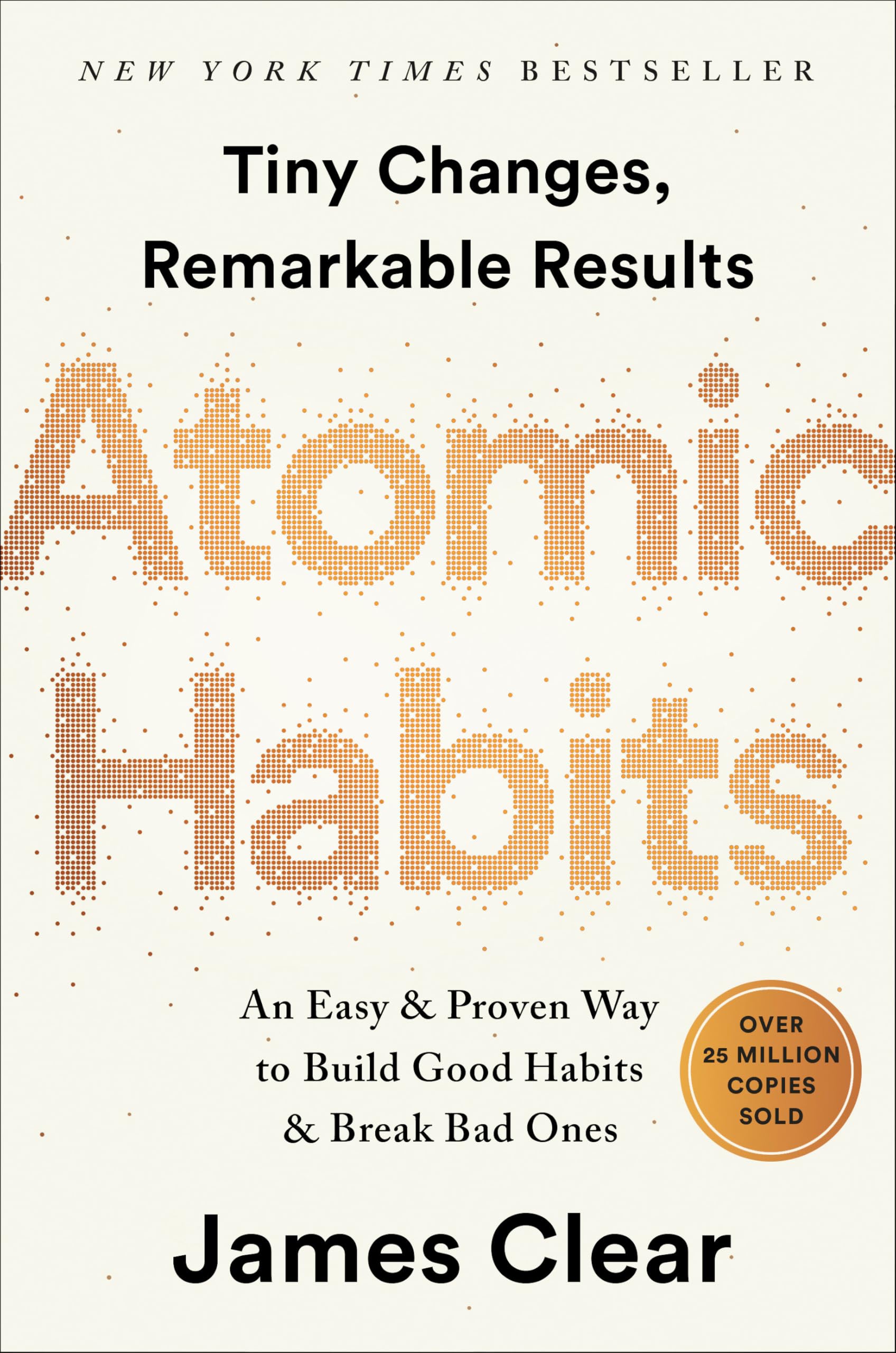
Atomic Habits
James Clear
As an Amazon Associate I earn from qualifying purchases.
What the mentors are
Each mentor is an AI character built around a broad approach to life. The Stoic focuses on calm and resilience through adversity. The Builder is about momentum and execution, and the Sage is about reflection and meaning. The Psychologist works with emotions and patterns, and the Strategist with decisions and trade-offs. Other archetypes cover further paths. Once you begin a conversation, the mentor asks questions and offers perspectives in its own style.
Why archetypes help
Looking at a problem through a different lens is a well-established reflective technique. Asking how a Stoic would see a setback, or how a strategist would weigh a decision, can loosen up habitual ways of thinking. Philosophers have used the approach for a long time. Seneca's letters, for example, suggest again and again that you imagine how a respected person would act.
How to get useful conversations
Be specific about the situation and about what you want to understand. Ask the mentor to push back on your assumptions. Treat its answers as prompts to think about, and not as instructions to follow. If a reply seems wrong or unhelpful, tell it so and ask for another angle, or switch to a different mentor.
Limits of AI
AI mentors can give confident answers that turn out to be inaccurate. They do not know your history, and they cannot judge risk. They are not therapists, coaches or advisers, and they are not suitable for a crisis. If you are in danger or are thinking of harming yourself, call or text 988 in the United States, or call your local emergency number.
Choosing a mentor
If you are unsure where to start, take the quiz or use the Life Balance Calculator, which recommends a mentor for your weakest life domain.
A short history of mentorship
The word mentor comes from Homer's Odyssey. In the story, Mentor is the friend Odysseus leaves in charge of his household, and the goddess Athena takes on Mentor's form to guide his son Telemachus. The idea of learning from an experienced guide runs through many traditions, from philosophical schools where students lived and studied with a teacher to modern apprenticeships and workplace mentoring programs. Research on workplace mentoring, including a 2008 meta-analysis by Eby and colleagues in the Journal of Vocational Behavior, has linked mentoring with modest improvements in attitudes, career outcomes and well-being. An AI mentor is not a person. It cannot offer the relationship, the accountability or the real-world knowledge that a human mentor provides, so use it alongside the people you trust, not in place of them.
Privacy of conversations
Your conversations are used to generate replies. Please try not to share details that could identify other people, and remember that you can ask us to delete your data at any time.
Starting a first conversation
A good first message describes one real situation in two or three sentences and ends with a question. You might ask what you could be overlooking, for example, or how someone with a different temperament would handle it. Short, concrete prompts usually get more useful replies than broad, general requests for advice.
Eight roles, not eight people
The mentors on this page are roles. None of them is a historical person, a licensed clinician, or someone who remembers you next week the way a friend would. Each card is a stance you can borrow for one conversation: a way of asking, and a kind of answer the stance is willing to give. The roster is The Stoic, The Builder, The Sage, The Psychologist, The Strategist, The Creator, The Historian, and The Minimalist. Their taglines on the cards are the whole promise. Calm through adversity. Momentum through action. Depth through reflection. Clarity through understanding. Clarity through analysis. Expression through courage. Wisdom through the ages. Clarity through simplicity.
A role is useful because it refuses some questions. The Stoic will not build you a timetable. The Builder will not sit with the meaning of a loss for its own sake. If you ask the wrong role, you get a thin answer, and that is information about the question as much as about the mentor. The quiz is one way to pick a starting role. It is not a personality measure. The Life Balance Calculator is another: it points at the life domain that scored lowest and suggests a role that fits that domain. You can ignore both and pick the card whose tagline names the problem you can say out loud.
The same problem, three different moves
Take a concrete case that shows up in the starter questions already printed on these cards: a job offer you are unsure about. The three roles that touch work do not give the same speech.
The Stoic, whose focus on the card is emotional control, resilience, hardship, discipline, and perspective, starts where the Enchiridion starts. Which part of the offer is a judgment you can revise, and which part is a fact you cannot? The salary number is a fact. The story that accepting it makes you a sellout, or that refusing it makes you brave, is a judgment. The public text is Epictetus's Enchiridion. The mentor's job is to keep pulling the conversation back to that line until you can say which worries are judgments. It is a poor mentor for the question "what should the counteroffer be."
The Strategist is built for that second question. The card says decisions, tradeoffs, life planning, positioning, and clarity under uncertainty, and the best-for line says major decisions and career strategy. A useful session names the trade you would actually be making: money against time, title against the kind of problems you want, a city against the people already in your life. The role should end by telling you what fact you still do not have. It should not end by announcing a destiny.
The Builder does not want the missing fact. The card says execution, work ethic, momentum, structure, and productivity. If you already know you are going to decline, the Builder asks what you will do on Monday morning so the decision does not evaporate into another week of rumination. If you already know you are going to accept, it asks for the first week of the new job written as a short list. Asking the Builder to decide for you wastes the role. Asking it to turn a decision you have already made into a Monday is what the card is for.
Feeling, meaning, and the long view
The Psychologist and the Stoic both meet you when the feeling is the problem, and they do not do the same work. The Psychologist card lists emotions, patterns, relationships, self-awareness, and internal conflict. The move is to name a pattern you have repeated: the argument that starts the same way, the apology you skip, the week you go quiet. The Stoic move is to separate the impression from the judgment about it. One looks for a repeating scene. The other looks for a judgment you added. If you want to understand why the scene keeps happening, pick the Psychologist. If you want a way to stand inside the scene without adding a second injury, pick the Stoic. Neither is a therapist. A pattern spotted in a chat is not a diagnosis.
The Sage and the Historian both step back, and the step is a different length. The Sage card is meaning, wisdom, life reflection, maturity, and perspective, and the best-for line is a well-lived life and whether you are living in a way you can respect. The Historian card is historical perspective, patterns of civilization, learning from the past, and legacy. The Sage asks what this year means inside one life. The Historian asks who else has stood in a similar bind and what they did next, without pretending that a Roman politician and a person answering email share a world. Use the Historian when you want a comparison that shrinks the panic. Use the Sage when the comparison is a way of avoiding the sentence you need to write about your own life.
Making something, or putting something down
The Creator and the Minimalist are opposites on purpose. The Creator card lists expression, creative blocks, originality, artistic courage, and identity through making. The fear it is willing to discuss is the fear of showing the work. The Minimalist card lists simplicity, essentialism, clarity, letting go, and focus, and the best-for line is the week when everything feels like it must be kept. A Creator session that never names a thing you will make is drifting. A Minimalist session that never names a thing you will stop is a mood, not a decision. People often need the Minimalist first: a list of what ends, so the Creator has an hour that is not already promised.
None of these roles can offer what the research on human mentoring describes. A 2008 meta-analysis by Eby and colleagues in the Journal of Vocational Behavior, already the study this site relies on when it talks about mentoring, links mentoring relationships with modest gains in attitudes and career outcomes. The mechanism in that literature is a person who knows you and will say the awkward thing again next month. An AI role can offer a stance on a Tuesday night. It cannot offer the relationship. Treat the reply as a prompt you can reject. If you are in danger or thinking of harming yourself, leave the chat and call or text 988 in the United States, or your local emergency number. The support page says the same thing in the language of help requests, and the disclaimer sets the limit in legal language.
A first message that gives the role something to do
Write three or four sentences: the situation, what you have already decided, and the kind of help you want from this role rather than from another. "I am going to decline the offer. I want the Builder. Tell me what Monday looks like" is a better opening than "what should I do with my life." If the reply slides into a different role, say so and ask it to return to the card you picked. If you want a different card, switch. The point of having eight is that you do not have to force one voice to do every job.