1. [The Evolving Landscape of Personal Growth Coaching](#the-evolving-landscape-of-personal-growth-coaching)
This article contains Amazon affiliate links. If you purchase through them, ArborSage — AI Wisdom Forest earns a small commission at no extra cost to you.
AI Life Coach vs. Human Life Coach: An Honest Comparison for 2026
An AI life coach vs. a human life coach represents a fundamental choice in personal development, offering distinct advantages and disadvantages that will shape individual growth journeys in 2026 and beyond. This comparison is crucial for anyone seeking guidance, as understanding these differences empowers individuals to select the most effective support system for their unique path towards wisdom and personal growth.
Table of Contents
- The Evolving Landscape of Personal Growth Coaching
- Understanding the Human Life Coach: Empathy, Intuition, and Experience
- The Rise of the AI Life Coach: Accessibility, Data, and Scalability
- Key Differentiators: Where AI and Human Coaches Diverge
- Choosing Your Path: When to Opt for AI, When for Human, and When for Both
- Practical Integration: Maximizing Your Coaching Experience in 2026
- The Future of Coaching: Collaboration, Specialization, and Ethical Considerations
The Evolving Landscape of Personal Growth Coaching
The quest for personal growth and self-improvement is timeless, yet the tools and methods we employ are constantly evolving. For centuries, wisdom was passed down through mentors, elders, and philosophical texts. In the modern era, professional life coaching emerged as a structured approach to guide individuals toward achieving their goals, overcoming challenges, and unlocking their full potential. Now, as we navigate 2026, a new paradigm has firmly established itself: the AI life coach. This technological leap has introduced an unprecedented level of accessibility, data-driven insights, and personalized interaction, challenging the traditional understanding of what a "coach" can be.
The Growing Demand for Personal Growth Support
In an increasingly complex and fast-paced world, individuals are seeking clarity, purpose, and resilience more than ever before. The pressures of work, relationships, and societal expectations often leave people feeling overwhelmed or stuck. This heightened demand for support has fueled the growth of the coaching industry, making it a multi-billion dollar market. People are actively looking for guidance to navigate career transitions, improve relationships, manage stress, cultivate mindfulness, and find deeper meaning in their lives. The desire for a structured path to wisdom and self-mastery is a universal human experience, and both human and AI coaches are stepping up to meet this need.
The Digital Transformation of Mentorship
Just as education, healthcare, and commerce have undergone digital transformations, so too has the realm of personal development. Online courses, virtual workshops, and digital communities have paved the way for AI-powered mentorship. These platforms leverage advanced algorithms, natural language processing, and machine learning to offer personalized advice, exercises, and accountability. This digital shift democratizes access to coaching, making it available to a broader audience regardless of geographical location or financial constraints. The ability to interact with a "coach" 24/7, from the comfort of one's home, represents a significant departure from traditional, in-person coaching models.
Setting the Stage for a Fair Comparison
To truly understand the value proposition of an AI life coach vs. a human life coach, we must move beyond simple assumptions and delve into their core functionalities, strengths, and limitations. This article aims to provide an honest, balanced perspective for 2026, acknowledging that both modalities have their rightful place in the personal growth ecosystem. Our goal is not to declare one superior to the other, but rather to illuminate the scenarios where each excels, helping you make an informed decision for your unique journey on ArborSage — AI Wisdom Forest.
Understanding the Human Life Coach: Empathy, Intuition, and Experience
The human life coach stands as the traditional pillar of personal development guidance. Their approach is rooted in the rich tapestry of human experience, offering a depth of understanding and connection that is inherently unique. When you engage with a human coach, you are not just receiving advice; you are entering into a dynamic, empathetic relationship built on trust, active listening, and shared humanity. This relational aspect is often cited as the most profound benefit of human coaching, fostering an environment where vulnerability can thrive and genuine transformation can occur.
The Power of Human Connection and Empathy
At the heart of human coaching lies the irreplaceable power of empathy. A skilled human coach can read between the lines, pick up on subtle non-verbal cues, and truly understand the emotional nuances of your situation. They can relate to your struggles on a personal level, drawing from their own life experiences and observations of countless others. This empathetic connection creates a safe space, allowing you to explore deep-seated beliefs, fears, and aspirations without judgment. The feeling of being truly seen and heard by another person is a powerful catalyst for change, fostering a sense of validation and belonging that algorithms simply cannot replicate. This profound connection is a cornerstone of effective personal growth.
Intuition, Nuance, and Unstructured Problem Solving
Human coaches possess intuition – a complex cognitive ability to understand something instinctively, without the need for conscious reasoning. This intuition allows them to identify patterns, anticipate challenges, and offer insights that go beyond logical data analysis. They can adapt their approach on the fly, responding to your emotional state, energy levels, and unspoken needs. When faced with complex, unstructured problems – those messy, ill-defined challenges of life that don't have clear-cut solutions – a human coach can navigate the ambiguity with grace, helping you explore multiple perspectives and uncover creative solutions. Their ability to hold space for uncertainty and guide you through it is invaluable.
Real-World Experience and Holistic Perspective
Many human coaches bring a wealth of diverse life experiences to their practice, whether it's navigating career changes, overcoming personal adversity, or mastering specific skills. This lived experience informs their coaching, providing practical wisdom and relatable anecdotes. They can offer a holistic perspective, understanding how different aspects of your life – relationships, health, career, spirituality – are interconnected. This allows them to help you develop strategies that are not just effective in one area, but contribute to overall well-being and a balanced, fulfilling life. Their guidance often extends beyond specific goals to foster a deeper understanding of self and purpose, aligning with the core principles of wisdom and personal growth.
📚 Recommended Resource: Meditations by Marcus Aurelius This timeless text offers profound insights into Stoic philosophy, providing practical wisdom for cultivating inner peace, resilience, and a virtuous life – principles often explored with a human coach. Amazon link: https://www.amazon.com/dp/0812968255?tag=seperts-20
The Rise of the AI Life Coach: Accessibility, Data, and Scalability
The emergence of the AI life coach marks a significant paradigm shift in how individuals access personal development support. Leveraging advancements in artificial intelligence, machine learning, and natural language processing, AI coaches offer a distinct set of advantages centered around accessibility, data-driven insights, and unparalleled scalability. These digital mentors are not designed to replicate human consciousness but rather to augment and, in some cases, redefine the coaching experience through their unique capabilities.
24/7 Availability and Unmatched Accessibility
One of the most compelling advantages of an AI life coach is its constant availability. Unlike human coaches who have limited schedules and geographical constraints, an AI coach is accessible 24 hours a day, 7 days a week, from virtually anywhere with an internet connection. This means you can seek guidance, process thoughts, or work through exercises whenever inspiration strikes, or a challenge arises – whether it's late at night, early in the morning, or during a lunch break. This democratizes access to coaching, making it available to individuals in remote areas, those with demanding schedules, or anyone who might feel intimidated by traditional coaching settings. The convenience factor alone is a game-changer for many seeking consistent personal growth support.
Data-Driven Insights and Objective Feedback
AI coaches excel at processing vast amounts of data, identifying patterns, and offering objective feedback based on established psychological principles and best practices. They can analyze your input, track your progress, and suggest tailored exercises or resources based on your stated goals and past interactions. For instance, an AI might notice a recurring pattern in your language indicating self-doubt and then recommend specific affirmations or cognitive behavioral therapy (CBT) techniques. This data-driven approach removes potential human biases and ensures a consistent, evidence-based methodology. While they lack intuition, their ability to cross-reference your input with a massive knowledge base can provide remarkably precise and actionable insights.
Scalability and Cost-Effectiveness
The scalability of AI coaching is revolutionary. A single AI model can serve thousands, even millions, of users simultaneously, making it an incredibly cost-effective solution compared to human coaching. This significantly lowers the barrier to entry for personal development support, allowing individuals who might not be able to afford traditional coaching to still receive valuable guidance. This cost-effectiveness doesn't necessarily mean a compromise on quality for certain types of interactions. For structured goal setting, habit formation, or learning new concepts, AI coaches can deliver high-quality, personalized content at a fraction of the cost, making personal growth more attainable for a global audience.
Key Differentiators: Where AI and Human Coaches Diverge
While both AI and human coaches aim to facilitate personal growth, their fundamental nature leads to distinct differences in their approach, capabilities, and limitations. Understanding these divergences is critical for anyone weighing an AI life coach vs. a human life coach, as it highlights the unique strengths each brings to the table. It's not about one being inherently "better," but rather about recognizing which tool is best suited for specific needs and stages of your personal growth journey.
Emotional Intelligence and Empathy vs. Algorithmic Processing
The most striking difference lies in their capacity for emotional intelligence and empathy. A human coach can genuinely empathize with your struggles, understand unspoken emotions, and offer comfort through shared human experience. They can adapt their tone, pace, and approach based on your emotional state, providing a nuanced and deeply personal interaction. An AI coach, conversely, processes language and data. While it can be programmed to recognize emotional keywords and respond with supportive language, its "empathy" is algorithmic – a sophisticated simulation based on patterns, not genuine feeling. It cannot truly understand the subjective experience of grief, joy, or existential angst in the way another human can. This distinction is paramount for deep emotional work.
Intuition and Creativity vs. Data-Driven Logic
Human coaches often rely on intuition, drawing connections that aren't immediately obvious, and offering creative solutions that might not be explicitly stated in a manual. They can "read the room" (even virtually) and pivot their strategy based on subtle cues. Their creativity allows for innovative problem-solving and personalized exercises that emerge organically from the coaching conversation. AI coaches, on the other hand, operate on data-driven logic. They excel at pattern recognition, applying established frameworks, and providing information based on their vast training data. While they can generate novel combinations of existing ideas, their "creativity" is constrained by their programming and the data they've been fed. They are less likely to offer truly out-of-the-box, intuitive insights for highly unique or deeply personal dilemmas.
Accountability and Relationship Dynamics
The nature of accountability also differs significantly. With a human coach, accountability often comes from the relational dynamic – the desire to not let down someone you respect, the commitment made in a shared space, and the direct, personal follow-up. This human connection can be a powerful motivator. An AI coach provides accountability through structured check-ins, reminders, and progress tracking. While effective for habit formation and goal adherence, it lacks the interpersonal pressure and emotional investment that a human relationship can provide. The relationship with an AI is transactional and functional, whereas with a human, it's often transformative and deeply personal.
Comparison Table: AI Life Coach vs. Human Life Coach (2026)
| Feature | AI Life Coach (e.g., ArborSage AI Mentors) | Human Life Coach |
|---|---|---|
| Availability | 24/7, on-demand | Scheduled sessions, limited availability |
| Cost | Generally lower (subscription-based, often free tiers) | Significantly higher (per session, package deals) |
| Empathy/Emotional | Algorithmic simulation, pattern-based responses | Genuine empathy, intuitive understanding of emotions |
| Intuition/Creativity | Data-driven logic, pattern recognition, structured solutions | Intuitive insights, creative problem-solving, nuanced adaptation |
| Personal Connection | Functional, transactional, informational | Deeply relational, supportive, trusting bond |
| Accountability | Automated reminders, progress tracking, structured check-ins | Interpersonal pressure, direct follow-up, shared commitment |
| Bias | Can reflect biases in training data; generally objective in application | Susceptible to human biases; can offer unique perspectives |
| Specialization | Broad knowledge base, can simulate various archetypes (e.g., Stoic Sage) | Often highly specialized (e.g., career, executive, relationship, spiritual) |
| Privacy | Data processed by algorithms; strong data security protocols essential | Confidentiality through professional ethics; human judgment involved |
| Use Cases | Habit formation, goal setting, information retrieval, structured learning | Deep emotional work, complex relationship issues, existential crises, trauma |
📚 Recommended Resource: Man's Search for Meaning by Viktor Frankl This profound book explores the human quest for meaning, even in the most dire circumstances, offering a powerful perspective that can be deepened through reflection with either an AI or human coach. Amazon link: https://www.amazon.com/dp/0807014273?tag=seperts-20
Choosing Your Path: When to Opt for AI, When for Human, and When for Both
The decision between an AI life coach vs. a human life coach is not a matter of right or wrong, but rather a strategic choice based on your specific needs, goals, budget, and comfort level. In 2026, the landscape of personal growth is rich enough to accommodate both, and increasingly, to integrate them. The key is to understand which modality best serves your current stage of development and the nature of the challenges you face.
When an AI Life Coach Excels (e.g., ArborSage AI Mentors)
AI coaches are particularly effective for specific, structured personal growth tasks and when accessibility and cost are primary concerns.
✅ Habit Formation and Tracking: If you're looking to build new habits (e.g., daily meditation, exercise, journaling) or break old ones, an AI coach can provide consistent prompts, track your progress, and offer data-driven encouragement without judgment. Its 24/7 availability means you can log your efforts anytime. ✅ Goal Setting and Action Planning: For defining clear, measurable goals and breaking them down into actionable steps, an AI coach can be highly efficient. It can help you structure your plan, identify potential obstacles, and remind you of your commitments. ✅ Information and Resource Retrieval: When you need quick access to information on specific personal growth topics (e.g., Stoic principles, mindfulness techniques, productivity hacks), an AI can instantly provide summaries, exercises, and relevant resources from its vast knowledge base. ✅ Journaling and Self-Reflection Prompts: AI can offer guided journaling prompts or reflective questions that help you explore your thoughts and feelings, acting as a non-judgmental sounding board for self-discovery. ✅ Budget-Conscious Personal Growth: For those with limited financial resources, AI coaching provides an invaluable entry point into structured personal development, offering significant value at a fraction of the cost of human coaching. ✅ Anonymity and Reduced Social Anxiety: Some individuals prefer the anonymity of interacting with an AI, especially when discussing sensitive topics or when they feel social anxiety in human interactions.
When a Human Life Coach is Indispensable
Human coaches shine in situations requiring deep emotional processing, complex relational dynamics, and nuanced personal transformation.
✅ Deep Emotional Processing and Trauma: For navigating significant emotional challenges, past traumas, grief, or complex psychological issues, the empathy, intuition, and non-judgmental presence of a human coach are paramount. This is where true healing and profound insight often occur. ✅ Complex Relationship Dynamics: When dealing with intricate interpersonal issues – whether in romantic relationships, family, or professional settings – a human coach can offer nuanced perspectives, help you understand underlying dynamics, and role-play difficult conversations. ✅ Existential Crises and Purpose Finding: For those grappling with questions of meaning, purpose, and identity, a human coach can provide the philosophical depth, compassionate inquiry, and sustained support needed to explore these profound areas. ✅ Accountability Through Connection: If you thrive on the personal connection and the feeling of being truly seen and supported by another person, a human coach's relational accountability can be a much stronger motivator. ✅ Developing Intuition and Emotional Intelligence: A human coach can actively help you cultivate your own intuition and emotional intelligence by modeling these qualities and guiding you through exercises that build these skills. ✅ Navigating Unstructured, Ambiguous Challenges: For problems that lack clear definitions or solutions, a human coach can help you sit with ambiguity, explore creative options, and find clarity where data alone cannot.
The Hybrid Approach: Best of Both Worlds
In 2026, the most effective strategy for many will be a hybrid approach, combining the strengths of both an AI life coach and a human life coach.
Case Study: Sarah, the Overwhelmed Entrepreneur — Before/After
Before: Sarah, a 35-year-old entrepreneur, felt overwhelmed. She had ambitious business goals but struggled with procrastination, time management, and imposter syndrome. She considered a human coach but couldn't afford the weekly sessions and found scheduling difficult. Her personal growth was stagnant.
After: Sarah started using an AI life coach on ArborSage for daily habit tracking (waking up early, planning her day) and goal breakdown. The AI provided structured prompts for her morning routine and evening reflection, helping her identify procrastination triggers. For deeper issues like imposter syndrome, she found a human coach who offered a more affordable bi-weekly group coaching session. During these sessions, the human coach provided empathetic support, helped her reframe negative self-talk, and connected her with others facing similar challenges. The AI handled the day-to-day accountability and structured tasks, while the human coach provided the emotional depth and community. This hybrid model allowed Sarah to make significant progress in both her business and personal well-being, proving that an AI life coach vs. a human life coach doesn't have to be an either/or choice.
This integrated model allows the AI to handle the routine, data-driven aspects of coaching, freeing up the human coach to focus on the complex emotional, relational, and intuitive work that only they can provide. It's a powerful synergy for comprehensive personal growth.
Practical Integration: Maximizing Your Coaching Experience in 2026
Successfully integrating coaching into your personal growth journey, whether with an AI life coach, a human life coach, or both, requires a strategic and intentional approach. In 2026, the tools are more sophisticated than ever, but their effectiveness still hinges on how you engage with them. Maximizing your experience means understanding how to prepare, how to interact, and how to apply the insights gained to your daily life.
Step 1 of 3: Define Your Goals and Expectations Clearly
Before engaging with any coach, clarity is paramount. What specific outcomes are you seeking? Do you want to build a new habit, overcome a particular fear, improve a relationship, or find a deeper sense of purpose?
- For AI Coaches: Be explicit and detailed in your prompts and inputs. The more precise your questions and goals, the more targeted and helpful the AI's responses will be. Treat it like a very intelligent, but literal, assistant. For example, instead of "I want to be happier," try "I want to establish a daily gratitude practice to improve my mood by 10% within 30 days."
- For Human Coaches: Come prepared with a clear agenda for your sessions. While a good human coach can help you uncover your goals, having a starting point allows for more productive use of your time. Be ready to articulate your challenges, aspirations, and what you hope to gain from the coaching relationship.
Step 2 of 3: Active Engagement and Honest Self-Reflection
Coaching is not a passive activity; it requires your active participation and a commitment to honest self-reflection. The value you derive is directly proportional to the effort you put in.
- With AI Coaches: Engage regularly. Respond to prompts, complete exercises, and provide feedback on the AI's suggestions. Use it as a journaling tool, a thought partner, or an accountability buddy. The more you interact, the better the AI can learn your patterns and tailor its responses. Don't just consume information; actively apply it.
- With Human Coaches: Be open, vulnerable, and honest. Share your true thoughts, feelings, and struggles. Don't hold back out of embarrassment or fear of judgment. Be prepared to do the "homework" assigned between sessions and reflect deeply on the insights gained. Ask clarifying questions and challenge assumptions when necessary. This is where the magic of personal growth truly happens.
Step 3 of 3: Implement, Iterate, and Seek Feedback
The true measure of coaching success lies in the application of insights to your real life. Coaching is a catalyst for change, but you are the agent of that change.
- From AI Coaching: Implement the strategies and exercises suggested by the AI. Track your progress diligently. If something isn't working, tell the AI. You can iterate by asking for alternative approaches or refining your goals. The AI can quickly adjust and provide new options based on your feedback.
- From Human Coaching: Take concrete actions based on your coaching discussions. Experiment with new behaviors and mindsets. Reflect on the outcomes and bring these back to your next session. Be open to feedback from your coach and from your own experiences. The iterative process of trying, reflecting, and adjusting is fundamental to sustained personal growth.
By consciously applying these steps, you can transform your coaching experience from a series of isolated interactions into a powerful, continuous engine for self-improvement, whether you're working with an AI life coach, a human life coach, or a synergistic blend of both. Remember, the journey towards wisdom is ongoing, and effective coaching provides the compass and map. You can find more guidance on your path at ArborSage — AI Wisdom Forest.
📚 Recommended Resource: Atomic Habits by James Clear This book is a masterclass in habit formation and practical systems for self-improvement, perfectly complementing the structured, actionable guidance often provided by an AI life coach. Amazon link: https://www.amazon.com/dp/0735211299?tag=seperts-20
The Future of Coaching: Collaboration, Specialization, and Ethical Considerations
As we look beyond 2026, the trajectory of both AI and human coaching points towards a future characterized by increased collaboration, hyper-specialization, and a growing emphasis on ethical frameworks. The question will no longer be simply "AI life coach vs. human life coach," but rather "how can these powerful modalities work together to create the most impactful personal growth experiences?" This evolution promises exciting new possibilities but also necessitates careful consideration of the responsibilities that come with advanced technology.
The Rise of Collaborative Coaching Models
The most significant trend will be the integration of AI and human coaching into seamless, collaborative models. Imagine a scenario where an AI assistant handles the initial intake, collects data on your habits and goals, and provides daily micro-coaching prompts. This data is then summarized and presented to your human coach, who can use it to inform deeper, more impactful sessions, focusing their valuable time on emotional processing, strategic breakthroughs, and complex problem-solving. This hybrid approach leverages the strengths of each: AI for efficiency, data analysis, and consistent support; human for empathy, intuition, and nuanced guidance. This model could significantly reduce the cost of human coaching by optimizing their time, making high-quality personalized support more accessible.
Hyper-Specialization in Both AI and Human Coaching
Both AI and human coaches will become increasingly specialized. AI coaches will likely develop highly refined "personalities" or "archetypes" tailored to specific needs, such as a "Stoic Sage" AI for resilience, a "Mindfulness Guide" AI for presence, or a "Career Strategist" AI for professional development, much like the AI wisdom mentors offered on ArborSage. Human coaches, in turn, will be able to carve out niche areas of expertise, focusing on specific demographics (e.g., founders, artists, new parents) or unique challenges (e.g., grief coaching, spiritual awakening, leadership in emerging tech). This specialization will allow individuals to find precisely the right kind of guidance for their unique journey, fostering deeper and more effective transformations.
Navigating Ethical Considerations and Data Privacy
With the increasing reliance on AI in personal growth, ethical considerations around data privacy, algorithmic bias, and the psychological impact of human-AI interaction will become paramount.
- Data Privacy: As AI coaches collect vast amounts of personal data, robust privacy protocols and transparent data usage policies will be essential. Users need assurance that their sensitive information is protected and not misused.
- Algorithmic Bias: AI models are trained on existing data, which can inadvertently contain biases. Developers must actively work to identify and mitigate these biases to ensure that AI coaching provides equitable and fair guidance to all users, regardless of background.
- Psychological Impact: The long-term psychological effects of forming emotional attachments or relying heavily on AI for support need further research. While beneficial, understanding the boundaries and potential pitfalls of such relationships is crucial for healthy personal growth.
- Professional Standards: Just as human coaches adhere to ethical guidelines, a new set of standards will likely emerge for AI coaching, ensuring responsible development and deployment.
The future of coaching is not about one replacing the other, but about a symbiotic relationship where technology amplifies human potential. By embracing collaboration, specialization, and ethical responsibility, we can unlock unprecedented opportunities for wisdom and personal growth for everyone. To discover your own path, consider taking the Find Your Wisdom Mentor quiz on ArborSage.
Frequently Asked Questions
Q: Is an AI life coach as effective as a human life coach? A: The effectiveness depends on your specific needs. An AI life coach excels at structured tasks like habit formation, goal tracking, and information retrieval. A human life coach is indispensable for deep emotional processing, complex relational issues, and navigating existential questions where empathy and intuition are crucial.
Q: How much does an AI life coach cost compared to a human life coach? A: AI life coaches are generally significantly more affordable, often available through subscription models or even free tiers. Human life coaches typically charge higher rates per session or package, reflecting their specialized training, personal attention, and limited availability.
Q: Can an AI life coach understand my emotions? A: An AI life coach can process language to identify emotional cues and respond with supportive language based on its programming and training data. However, it does not genuinely "feel" or "understand" emotions in the human sense. Its empathy is algorithmic, not experiential.
Q: What kind of personal growth goals are best suited for an AI coach? A: AI coaches are excellent for goals related to habit building, daily accountability, structured learning, information gathering, and breaking down large goals into actionable steps. They are also great for consistent, non-judgmental check-ins.
Q: When should I definitely choose a human life coach over an AI? A: You should prioritize a human life coach for deep emotional work, processing trauma, navigating complex relationship issues, seeking profound self-discovery, or when you require the unique empathy, intuition, and personal connection that only another human can provide.
Q: Can I use both an AI and a human life coach simultaneously? A: Yes, a hybrid approach is often highly effective. You can use an AI for daily tracking, reminders, and structured exercises, while reserving your human coach for deeper emotional insights, complex problem-solving, and personalized strategic guidance.
Q: Are AI life coaches secure and private? A: Reputable AI coaching platforms prioritize data security and privacy. However, it's crucial to review their privacy policies to understand how your data is collected, stored, and used. Always be mindful of the information you share with any digital service.
Q: Will AI eventually replace human life coaches? A: It's unlikely that AI will fully replace human life coaches. Instead, the future points towards collaboration, where AI augments human capabilities and handles routine tasks, allowing human coaches to focus on the unique aspects of personal connection, intuition, and complex emotional support that only they can provide.
Conclusion
The choice between an AI life coach vs. a human life coach in 2026 is a nuanced one, reflecting the diverse needs and aspirations of individuals on their personal growth journeys. We've seen that human coaches offer unparalleled empathy, intuition, and the profound connection of shared experience, making them indispensable for deep emotional work and complex relational challenges. Conversely, AI coaches provide unmatched accessibility, data-driven insights, and cost-effectiveness, excelling at structured goal setting, habit formation, and consistent, unbiased support.
Ultimately, the most powerful path for many will involve a synergistic blend of both. Leveraging an AI for daily accountability and data-driven insights, while reserving the invaluable wisdom and emotional depth of a human coach for critical breakthroughs, offers a comprehensive and highly effective approach to personal development. As technology continues to evolve, the landscape of coaching will only become richer, providing more tailored and accessible options for everyone seeking to cultivate wisdom and achieve their fullest potential. The future of personal growth is bright, offering a dynamic interplay between cutting-edge technology and timeless human connection.
Ready to explore your own wisdom path? Discover your AI wisdom mentor on ArborSage — AI Wisdom Forest — take the free quiz and get matched to the mentor archetype that fits your journey.
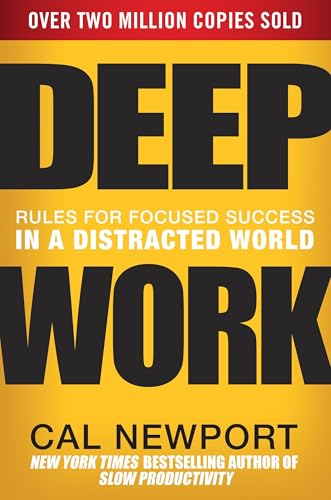
📚 Recommended Reading
Deep WorkCal Newport · Focus
Rules for focused success in a distracted world — essential for anyone seeking meaningful personal growth.
View on Amazon $14–$20Recommended Reading — Amazon Affiliate


As an Amazon Associate, ArborSage earns from qualifying purchases.


